While Pope Francis’s death on April 21, 2025, was officially attributed to a stroke and cardiac arrest, several controversies and conspiracy theories have emerged surrounding his passing.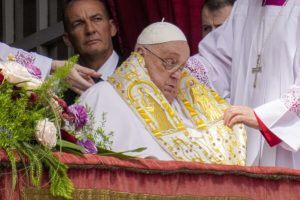
Misinformation and Conspiracy Theories
In the months leading up to his death, false reports about Pope Francis’s health circulated widely on social media platforms like WhatsApp and TikTok. These included fabricated announcements of his death, often designed to resemble official Vatican communications. The Vatican actively debunked these rumors, releasing regular health updates and even an audio message from Pope Francis to counteract the misinformation.
Some of these false reports were propagated by unauthorized groups misusing the name “Jesuits” to lend credibility to their claims. Church officials, including Filipino priest Fr. Gregory Gaston, urged the public to verify information through official sources and avoid spreading unverified news.
Political and Ideological Reactions
Pope Francis’s progressive stances on issues like climate change, social justice, and interfaith dialogue garnered both admiration and criticism. Following his death, U.S. Representative Marjorie Taylor Greene made a controversial social media post implying that “evil is being defeated by the hand of God,” which many interpreted as a reference to the Pope’s passing. Greene, a vocal critic of the Catholic Church, has previously accused its leadership of various wrongdoings.
Ukrainian Catholics’ Disappointment
In Ukraine, many Catholics expressed disappointment over Pope Francis’s stance on the war with Russia. In a 2024 interview, he suggested that Ukraine should “have the courage of the white flag” and seek peace, a position that clashed with Ukraine’s view and that of its Western allies. While he condemned the war as an act of aggression, his perceived neutrality and failure to explicitly condemn Russian President Vladimir Putin led to criticism from Ukrainian Catholic leaders and faithful.
Absence from Argentina
Despite being the first Argentine Pope, Francis never returned to his homeland after becoming pontiff in 2013. This absence was a source of sorrow and disappointment for many Argentinians, especially those who had hoped for a papal visit. His death prompted a week of national mourning in Argentina, highlighting the complex relationship between the Pope and his native country.
Speculations About Internal Church Politics
Throughout his papacy, Pope Francis faced opposition from conservative factions within the Church. In 2021, he acknowledged that some of his critics were anticipating his death, noting that meetings had been held among prelates who believed he was in a more serious condition than publicly stated. These internal tensions have fueled speculation about the role of Church politics in the narratives surrounding his health and death.
While no credible evidence supports claims of foul play in Pope Francis’s death, the controversies and conspiracy theories reflect the polarized views of his papacy and the challenges he faced in leading a diverse and global Church.