On October 7, 2023, an armed conflict erupted between Israel and Hamas-led Palestinian militants from the Gaza Strip after the latter initiated a multi-pronged invasion of southern Israel. Following the clearing of Hamas militants, the Israeli military responded with an extensive aerial bombardment campaign on Gazan targets, later escalating to a large-scale ground invasion of Gaza. The casualties include over 1,400 Israelis, primarily civilians, and more than 10,000 Palestinians, with the majority being women and children under the age of 18. This marks the fifth war in the Gaza–Israel conflict, which is part of the broader Israeli–Palestinian conflict.
On the morning of October 7, militants in Gaza launched rockets against Israeli cities, while around 3,000 militants breached the Gaza–Israel barrier. Over 1,000 Israeli civilians were killed in various incidents, including the Re’im music festival massacre, and military bases were targeted. Additionally, over 200 civilians and Israeli soldiers were captured or abducted and taken to the Gaza Strip. Approximately 44 countries, mainly from the Western world, classified the civilian massacres as terrorism, while Hamas justified the invasion as retaliation for Israeli provocations.
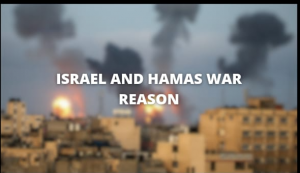
Israel’s declaration of a state of war the next day marked a significant military escalation, involving a lengthy aerial bombardment with 6,000 bombs dropped in the first six days, coordinated with a total blockade of the Gaza Strip. Israel advised 1.1 million Gazans to evacuate northern Gaza, while Hamas urged residents to stay in their homes and reportedly obstructed roads leading to southern Gaza. On October 27, Israel initiated a ground invasion of the Gaza Strip that is still ongoing.
The widespread civilian deaths have led to accusations of war crimes against both Israel and Hamas. As of November 6, the Hamas-run Gaza Health Ministry reported over 10,000 Palestinian casualties. The United Nations stated that more than 1.5 million Palestinians, over 70% of Gaza’s population, and over 200,000 Israelis have been internally displaced. Gaza is facing acute shortages of drinking water, food, and fuel, with its health system failing due to fuel and power shortages, leading to medical procedures being performed without anesthesia.
The conflict has triggered global protests, focusing on various issues such as demands for a ceasefire, the release of hostages, and opposition to the actions of both Israel and Hamas. Anti-Israeli protests, in particular, have been described as the largest since those against the Iraq War. The United States vetoed a United Nations Security Council resolution calling for an immediate humanitarian ceasefire, but a less binding resolution passed overwhelmingly in the United Nations General Assembly a week later.