Thousands Across America Protest Violence and Impunity by ICE

Across the United States, tens of thousands of people have taken to the streets in cities from Minneapolis to New York and beyond to protest what organizers and community leaders describe as a pattern of unaccountable violence by U.S. Immigration and Customs Enforcement (ICE) and other federal agents.
The wave of demonstrations began after the fatal shooting of Renee Good, a 37-year-old U.S. citizen, by an ICE agent in Minneapolis on January 7, 2026, an incident that immediately drew widespread outrage when bystander video and eyewitness testimony appeared to contradict initial federal claims about the circumstances of her death.
Organizers of the protests, many using the slogan “ICE Out for Good,” planned more than 1,000 events nationwide, with rallies, marches, vigils, and solidarity actions scheduled from coast to coast. Protesters have called for accountability, transparency, and an end to the deployment of heavily armed immigration enforcement officers in U.S. cities.
Local officials and civil liberties advocates have echoed many of these demands. Several Democratic elected leaders have publicly condemned what they call the militarized and uncontrolled use of force by ICE and Border Patrol agents, urging federal agencies to withdraw from Minneapolis and for investigations into use-of-force incidents to be independent and transparent.
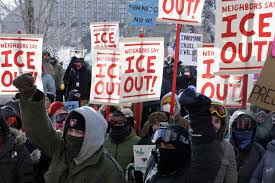
Federal Agents Shoot and Kill Another Person in Minneapolis
On Saturday, January 24, 2026, federal immigration officers shot and killed a 37-year-old man during a law enforcement operation in Minneapolis, just over two weeks after the Renee Good shooting.
Officials identified the victim as Alex Jeffrey Pretti, a Minneapolis resident and licensed intensive care nurse. Federal authorities said the man allegedly approached agents with a handgun and resisted their efforts to disarm him, prompting an officer to fire in what they described as self-defense.
However, widespread public skepticism remains about the official narrative. Multiple videos circulating on social media and witness accounts suggest that Pretti may have been unarmed in the moments before he was shot and that he was restrained by several officers at the time of the shooting.
This was the third shooting incident involving federal agents in Minneapolis in less than three weeks, following additional confrontations earlier in January that already had the city on edge.
The Minneapolis Police Chief appealed for calm after the latest shooting, while federal officials defended their actions as necessary for officer safety. At the same time, city and state leaders renewed their calls for federal agents to depart Minnesota and for local authorities to play a greater role in oversight and investigations.
Protests Intensify Amid Broader Debate on Federal Enforcement
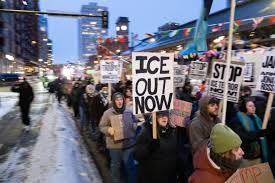 The killing of Pretti occurred just days after large protests in Minneapolis drew more than 10,000 people demonstrating against the federal immigration enforcement presence and broader policies they say are causing harm.
Those demonstrations have been marked by chants against ICE and federal agents, clashes with law enforcement, and visible frustration from community members who argue that excessive force has been used with what they describe as impunity. Protesters and legal observers have noted that federal agents historically face little accountability in shootings and use-of-force cases, contributing to a sense of injustice and urgency among demonstrators.
Beyond Minneapolis, protests and vigils have taken place in cities including New York, Chicago, Tucson, and others, reflecting a broad network of activists and community groups aligned around immigrant rights, civil liberties, and police accountability.
In Minneapolis, the situation remains tense, with the Minnesota National Guard activated to assist local law enforcement and ongoing calls from state officials — including Governor Tim Walz — for federal operations to be scaled back or ended.
National and Political Implications
The incidents have deepened political divisions at the national level. Supporters of enhanced enforcement argue federal agents are necessary to uphold immigration laws and protect communities, while critics contend that these actions represent a militarized, unaccountable force endangering both immigrant and citizen communities.
Civil liberties organizations such as the ACLU have condemned recent funding increases for ICE and other federal enforcement agencies, arguing that such funding enables unchecked use of force and undermines constitutional protections.
As protests continue and pressure mounts from elected officials, activists, and legal advocates, the debate over ICE’s role in U.S. cities and the appropriate limits on federal law enforcement powers remains at the center of the national conversation.